
The Progress Texas Daily Dispatch is delivered every weekday by Progress Texas Communications Director Chris Mosser. Rapid response on the breaking news stories Texas progressives need to know—all in less than 10 minutes!
Click below to listen! LINK TO MAIN PODCAST PAGE: https://progresstexas.org/progress-texas-podcast-network
For years now, Texas’s elected Republicans have treated our public universities as institutions to be remade in the image of their own worldview and agenda. They have gutted diversity programs designed to help our universities more closely resemble our population, they’ve weakened faculty governance put in place to leave academics to academia, they’ve pressured professors out of using the decades of training they’ve invested in, and they’ve narrowed what Texas college students can study as presented by those professors. The consequences for our young people are dire—as academic freedom, research, faculty recruitment, and the state’s ability to compete for talent are all at stake, while a recently-earned degree from a Texas public university now may as well carry an asterisk on a young graduate’s resume.
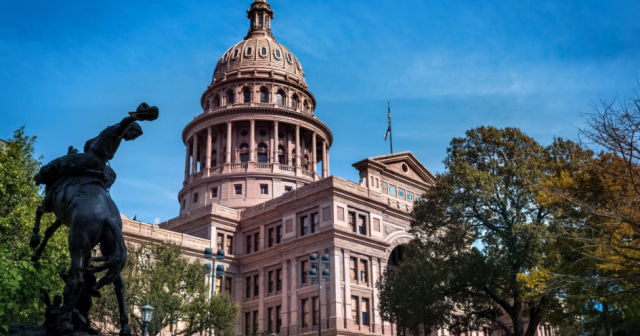
The Blue Tsunami midterm election, however, has changed who holds power in Austin—and who now steers our higher institutions of learning, presenting a genuine opportunity, perhaps just in time, to stop the MAGA campaign of ideological intervention on campus, even if fully reversing it may take some time and effort.
Hinojosa’s First Opportunity: Regents
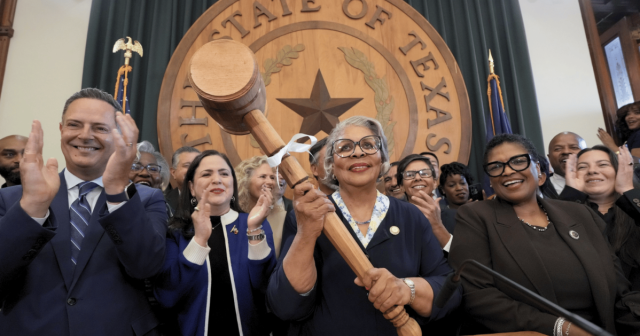
Daniel Perez at El Paso Matters says Gina Hinojosa will take over the Governor’s Mansion having built her political career largely on advocacy for public education—and her approach to higher education as governor will be equally consequential. Texas universities have been the target of intense and foundational political interference: declining support for full-time students, the Texas DEI ban, threats to tenure and academic freedom, and openly hostile censorship of curriculum. Higher education leaders in Texas say that under greater Democratic control, some repairs can begin quickly, but restoring institutional independence will be a larger undertaking.
One of Hinojosa’s most immediate tools is the appointment of university regents. About 20 regency renewals or vacancies across state’s array of university-system boards are expected early in her first administration, including three each at the University of Texas and Texas Tech systems—including both of those universities’ board chairs: Kevin Eltife at UT, who has spearheaded the torpedoing of DEI initiatives, expanded direct board involvement in academic affairs, and accelerated UT’s adoption of conservative agenda-oriented institutional programming, and Cody Campbell at Texas Tech, who has seen even more success in converting Tech into an instrument of Republican cultural politics, backing Chancellor Brandon Creighton’s restrictive, right-wing academic policies and famously dumping about a quarter-million dollars into Ken Paxton’s campaign for Senate while fighting for the Red Raiders to keep a quarterback caught gambling on his own team. Paxton’s subsequent intervention as Texas Attorney General inadvertently blew that deal out of the water.
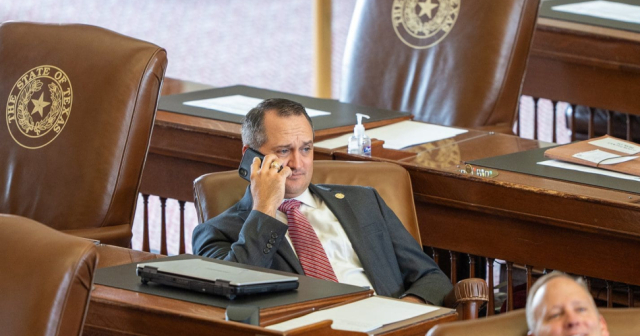
Texas university Regents select and evaluate chancellors and presidents, approve budgets, allocate resources, set tuition and faculty salaries, and award tenure—they are the ultimate directors of what our universities do, and appointing people with academic experience and a commitment to student success, rather than political loyalty or donor status, will change the tone at the top. Those appointments, however, will not be entirely within Governor-elect Hinojosa’s control: the Texas Senate, and its 19–12 GOP majority, will have the call on confirming Hinojosa’s nominees by a two-thirds vote.
The need for intervention is clear: Adam Serwer at The Atlantic says a recent faculty survey found that these days, 70.2 percent of Texas professors would not recommend the state to out-of-state colleagues looking for work. Student access is an issue as well, with research showing that the termination of in-state tuition for certain undocumented Texas high-school graduates may have kept as many as 57,000 of them from attending college in Texas or anywhere else, and has come at a cost to the institutions themselves of more than $81 million. Hinojosa and the new Legislature can and likely will begin turning the ship - the urgency is obvious, but patience will be necessary.
A Tale Of Three Campuses
Lexi Lonas Cochran at The Hill runs down the consequences of the campus adventures of Republicans in recent years, starkly visible across all of Texas’ three largest university systems.
At Texas Tech, faculty have been required to submit course materials for review by an AI-based system designed to flag content that might violate Chancellor Creighton’s new restrictions, resulting in red tags for works by Sandra Cisneros, Tony Kushner, and even Plato’s Republic. Professors say this poorly-designed and frankly lazy review system has generated inaccurate but still-enforceable findings, leading to self-censorship by professors, now reduced to teaching material they know to be academically unsound. More than half of Tech’s faculty now say they’re looking for employment elsewhere.
At Texas A&M, the pressure has been more direct and personal, with the well-known story of English professor Melissa McCoul, who was fired after a student-shot video of a classroom dispute became a political controversy involving state lawmakers including the insufferable State Rep. Brian Harrison and Governor Greg Abbott, both of whom publicly called for her firing, which she is currently challenging in court. Recently-enacted A&M policies have also restricted courses addressing race, gender, and sexuality, while the university has fully eliminated its women’s and gender studies programs. A&M leadership has leaned on justifying its policy changes as an effort to comply with state law, but A&M faculty lawsuits have challenged that interpretation— accusing the home of the Aggies of extensive overreach.
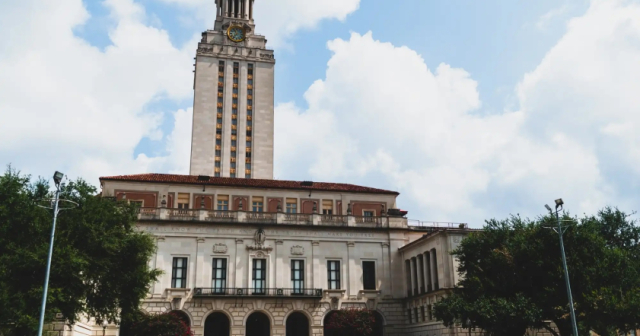
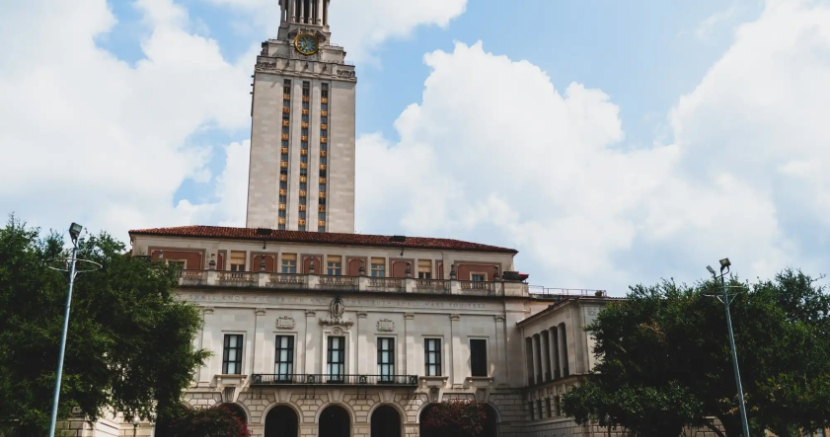
At the University of Texas at Austin—where controversy over the school song “The Eyes Of Texas” and a wanton crackdown by state police upon pro-Palestinian protestors seemed to be the beginning of the problem—administrators have recently announced the wholesale elimination of majors in Africana studies, Mexican American and Latino studies, and women’s and gender studies. More than 100 courses have been flagged for removal from the core curriculum. UT faculty members say that the political environment on the 40 Acres now exhibits a disproportionate degree of influence from European traditions, as other histories and scholarship have been actively and openly marginalized. And in a recent development right out of The Onion, Supreme Court Justice Clarence Thomas, whom Joy Sewing at the Houston Chronicle notes has “used his Supreme Court weight to oppose affirmative action, challenge federal voting rights protections and reject…legal resolutions designed to address racial discrimination”, has been tapped to teach a course on civil rights and the meaning of equality at UT next spring…you can’t make this stuff up.
Restoring the Public Trust
The new Democratic leadership will have to tackle the broader argument about what public universities are for. American Association of University Professors members and faculty at the University of Houston Daniel Davies and Daniel Morales, in an Austin American-Statesman op-ed, remind us that Texas’ universities were established as a public trust, are supported in part by proceeds from public lands, and are charged and expected to expand opportunity, research, and democratic understanding. Greg Abbott’s appointees to these important boards have instead turned their charges into a political game, redirecting attention and public resources towards their own ideological agendas, all with the backing of the still-fresh state laws: SB 17 - the statutory foundation for the dismantling of DEI infrastructure, enacted in 2023, and SB 37, which granted university governing boards authority over curriculum and degree-program decisions, enacted just last year. Primary author of both: then-State Senator Brandon Creighton.
These laws codify all this damage done to our public universities, and the message from the voters of the Blue Tsunami is for the Democrats now with the upper hand in the Legislature to repeal them both. That seems the only substantive way to restore the confidence of our faculty, students, their families, and the taxpaying public. But for opening moves, Governor-elect Hinojosa will be able to nominate regents who prioritize academic freedom, merit, and student success, and will need to prepare for—and prevail in—a likely fight over her nominations in the Republican controlled Senate. And, Attorney General Nathan Johnson will have the power to review the state’s position in currently-pending academic-freedom legal cases.
We’ve been celebrating and exploring the broad range of opportunities that this revolutionary moment in Texas politics makes possible—and the restoration of independence and academic integrity to our public universities should be a central priority of the 90th Texas Legislature. Progressives believe that government should work to build a better future, and few institutions are more essential to that future than our beloved universities. After years of political interference and ideological distortion, Texas higher education needs more than a simple change in leadership—it needs a full revival of the academic freedom, institutional independence, and public purpose that made Texas’ public universities legendary in the first place. The stakes, and the expectations of Texas voters, are very high indeed.
DONATE
Your donation supports our media and helps us keep it free of ads and paywalls.