
The Data Center Dilemma: A Chance For Economic Justice In Texas
The Progress Texas Daily Dispatch is delivered every weekday by Progress Texas Communications Director Chris Mosser. Rapid response on the breaking news stories Texas progressives need to know—all in less than 10 minutes!
Click below to listen! LINK TO MAIN PODCAST PAGE: https://progresstexas.org/progress-texas-podcast-network
High Voter Expectations On Data Centers
As recently as this time last year, approaching the 2025 holiday season, who would have thought that data centers and their impact upon both rural and urban Texas would turn out to be a central, catastrophic issue for the decades-long Republican lockdown on Texas politics? As the smoke clears on the humiliating defeat of those same Republicans, left only in control of the State Senate, as the 2027 legislative session draws near, AI and its infrastructure remain a central issue that’s developing in interesting directions.
Bipartisan Action Already Underway
A major political clash is inbound over the rapid expansion of the data center industry in Texas, exposing a growing conflict between what has become the state’s traditional pro-business economic development model under Republican rule, and the still-rising public concerns over who truly benefits from this particular strain of corporate growth.
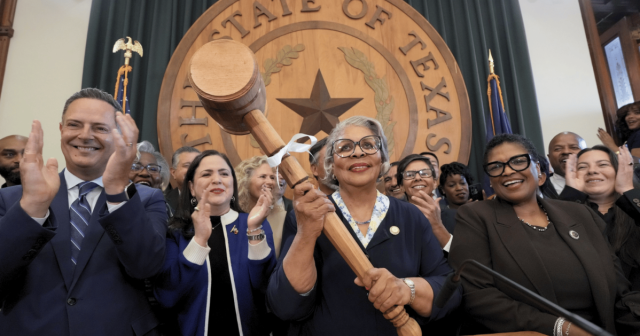
For years, Texas has beckoned technology companies with generous tax breaks, inexpensive land, accessible energy, and minimal regulation, but the explosive rise of AI has fundamentally altered this dynamic. The outgoing GOP regime either ignored, or didn’t bother to ask about, the massive amounts of electricity and water these operations require—as you know, the crux of the matter for thousands of Texas voters: an unprecedented strain on public infrastructure and natural resources that everyday Texans now risk subsidizing, or losing altogether. With Democratic Governor-elect Gina Hinojosa preparing to take office and the 90th Texas Legislature set to convene in January, in the wake of a public revolt that spans political ideologies, lawmakers from both parties are now reevaluating the entire scenario.
Mateo Rosiles at USA Today says that as this begins, we have Senate Bill 293—authored by Republican Senator Joan Huffman and backed by 23 of the Texas Senate’s 31 current and incoming members. The bill proposes repealing the state’s sales tax exemption for data centers, which currently allows qualifying facilities to avoid paying sales taxes on electricity, servers, and cooling equipment for up to 20 years. And, Democratic Senator Judith Zaffirini has filed two additional bills: SB 33, which would require data centers to cover the transmission costs tied to their electricity consumption, and SB 36, which would place limits on data center companies’ access to state and local economic development incentives.
We spent a lot of time talking about bipartisanship in the 90th Legislature yesterday, and the data center dilemma, with its accompanying widespread public frustration, provides an example of a political lane where cooperation is particularly warranted. The June UT Austin/Texas Politics Project poll showed that 56% of registered voters oppose data center construction in their communities, period. Fears, reasonable or not, over water depletion, grid strain, and rising utility bills have driven local governments across the state to weigh temporary construction moratoriums (more on that coming up).
Outgoing Republican Governor Greg Abbott, long both a Big Tech champion and benefactor, tried desperately during the election to intervene in order to save his own political skin—placing a pause new facility construction to allow the auditing of proposed grid connections, directing energy regulators to prevent expansion costs from shifting onto consumers, and mandating stricter enforcement of water-use reporting—but as we’ve talked about, the Texas Commission on Environmental Quality has nonetheless continued to process new data center buildout applications, thus Abbott’s is an empty gesture that turned out too little too late for the governor anyway. The central debate now is no longer whether Texas wants data centers, but whether any resource-heavy corporate build should receive massive tax breaks and public subsidies without proving tangible and worthwhile public benefits.
SpaceX and Tesla: Full Steam Ahead
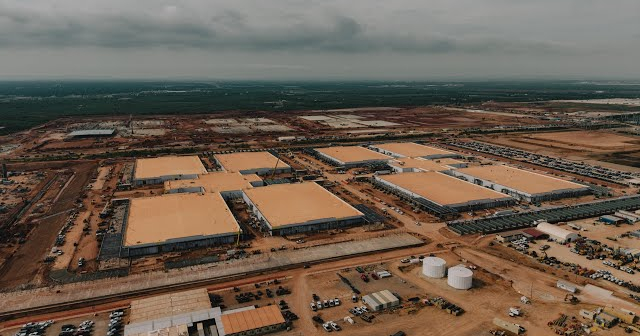
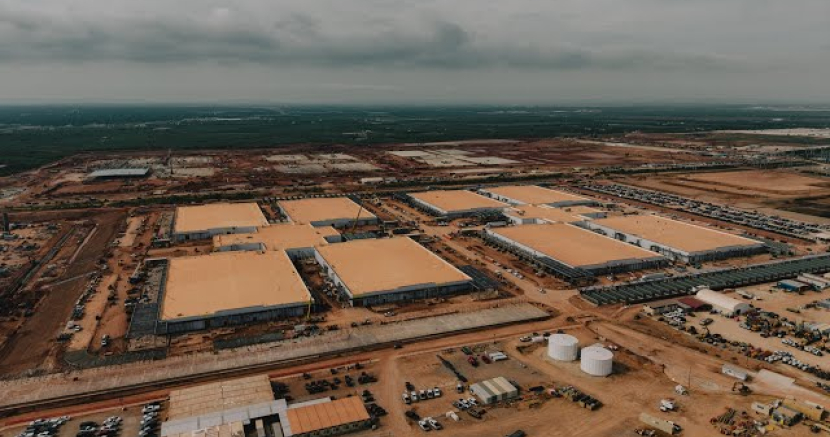
As all this plays out, Big Tech is by no means slowing their roll. Berenice Garcia at The Texas Tribune says that down in the Rio Grande Valley, Elon Musk’s SpaceX is planning a new $24 billion data center and an attached gas-fired power plant near the city of Brownsville, whose city leaders, at Musk’s request, recently removed the 444-acre project site from its city limits in exchange for $220 million dedicated to municipal water and wastewater infrastructure—a deal that’s drawn heavy scrutiny because at the same time, Brownsville was deploying a 90-day moratorium on new data center development. SpaceX urged rapid approval—warning that the $220 million offer would otherwise be withdrawn. Once de-annexed, the land was absorbed into the SpaceX company town of Starbase, placing the project outside Brownsville’s regulatory reach just as the city’s moratorium took effect.
Brownsville officials say all of this is about service logistics and critical infrastructure funding, but local residents and environmental groups are up in arms over the timing and the apparent subservience of the city—continuing to bend over backwards for corporate interests. The South Texas Environmental Justice Network is forming up protests, warning that the SpaceX gas-fired power plant is likely to worsen local air pollution while the proposed data center drains away already scarce regional water supplies—all, again, pointing back to Governor Abbott’s flimsy regulatory framework. Under the current rules, in generating its own electricity onsite, SpaceX will be able to bypass most oversight of their power generation apparatus—in other words, Elon Musk is way ahead of the state’s game, and it’s now up to the Lege to catch up.
Elon Musk’s New Texas Reality
For Musk, the Texas he fled California for is waking up to what’s happening, and evolving from an uncritical business haven into a more complex regulatory battleground. Reported by Benzinga, technology analyst Dan Ives said on the technology-based Pomp Podcast on Tuesday that if Musk wants to keep playing in our backyard, he’s gonna need to adopt a more diplomatic approach with state leaders who are no longer willing to rubber-stamp corporate expansion, and whose voters have come to view Musk and his ilk with intense disdain. Ives says Texas remains indispensable to Musk’s operations—he’s simply built too much here to just unplug and move to Florida. Ives also notes that all this sudden political uncertainty has contributed to a 20% to 25% discount in SpaceX’s valuation.
Beyond Starbase, Musk has that massive Terafab semiconductor venture with Tesla in Grimes County, which itself has sparked anxieties among the locals over water and power. Just like his hopes to flee all of this to Mars one day, Musk has dreams of putting data centers into orbit—but for now, his future is very much dug into Texas soil. Governor-elect Gina Hinojosa has been leaning into the view that corporations doing business in Texas must prove their value to Texas: a big change from the old guard in protection of the public interest—at long last—displacing unconditional corporate accommodation.
Grassroots Resistance Rises In The Fort
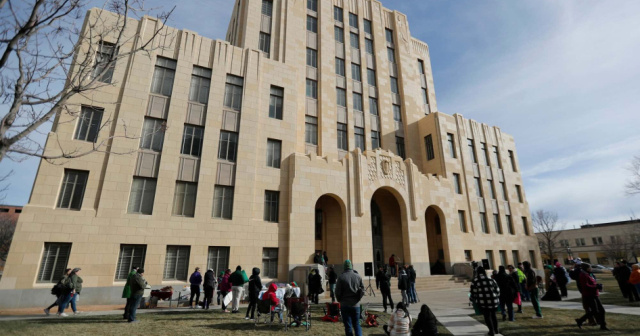
Zeroing in on North Texas, Cecilia Lenzen at the Fort Worth Report says organized resident opposition is actively reshaping local policy on Big Tech development around Cowtown. Earlier this week during a public hearing, residents overwhelmingly urged the Fort Worth City Council to pass their own temporary moratorium on new data centers to allow time for stronger regulations to be enacted—the said moratorium is looking likely to take effect in February and continue through at least late May, dates coinciding directly with the 90th legislative session.
Community advocates in Fort Worth point to the November 3 election results in Tarrant County and across Texas as proof of a shifting political mandate that demands immediate, substantial action by the Legislature. Governor-elect Hinojosa’s campaign pledges of a statewide pause on data center approvals, restrictions on related nondisclosure agreements that hide projects from communities, union labor mandates, water protections, and more have inspired hope at the local level for salvation from this existential and self-inflicted dilemma.
Redefining The AI Agreement
Ultimately, Governor-elect Hinojosa faces a historic opportunity to fundamentally renegotiate Texas’s relationship with the tech sector, which in terms of jobs or benefits for the people of Texas, has essentially been let off the hook by the outgoing Republican regime. AI technologist Tal Feldman writes in an opinion piece for the Austin American-Statesman that under existing law, a $500 million data center can avoid state sales taxes for two decades while creating as few as 40 jobs. Under Governor Abbott, Texas has foregone roughly $1.3 billion in tax revenue from these exemptions in just last year alone, and state audits have already caught six of these facilities violating even these meager job-creation promises—many others remain unexamined and the expectation that they’ll also be audited, and soon, is high.
Our hand has been poorly played here: Texas has the land, workforce, and energy infrastructure that tech companies need, which is plenty to draw them here—the state simply does not have to give away billions in public funds to attract them. In fact, Big Tech should be forced to guarantee ratepayer protections, recycle or supply their own water, and make real contributions to the overall Texas economy. One wonders how much of this extraordinary corporate generosity was ever justified by any actual economic benefit that would ever be delivered to Texans—as opposed to how much was simply the product of a political culture that become complacent in treating the interests of wealthy corporations as synonymous with the interests of our people: a state government backing billionaires, not everyday Texans like you and me.
DONATE
Your donation supports our media and helps us keep it free of ads and paywalls.